Interactive Training Modules for Avian Influenza Surveillance
A Product Design and UX Case Study by Brendan Stern
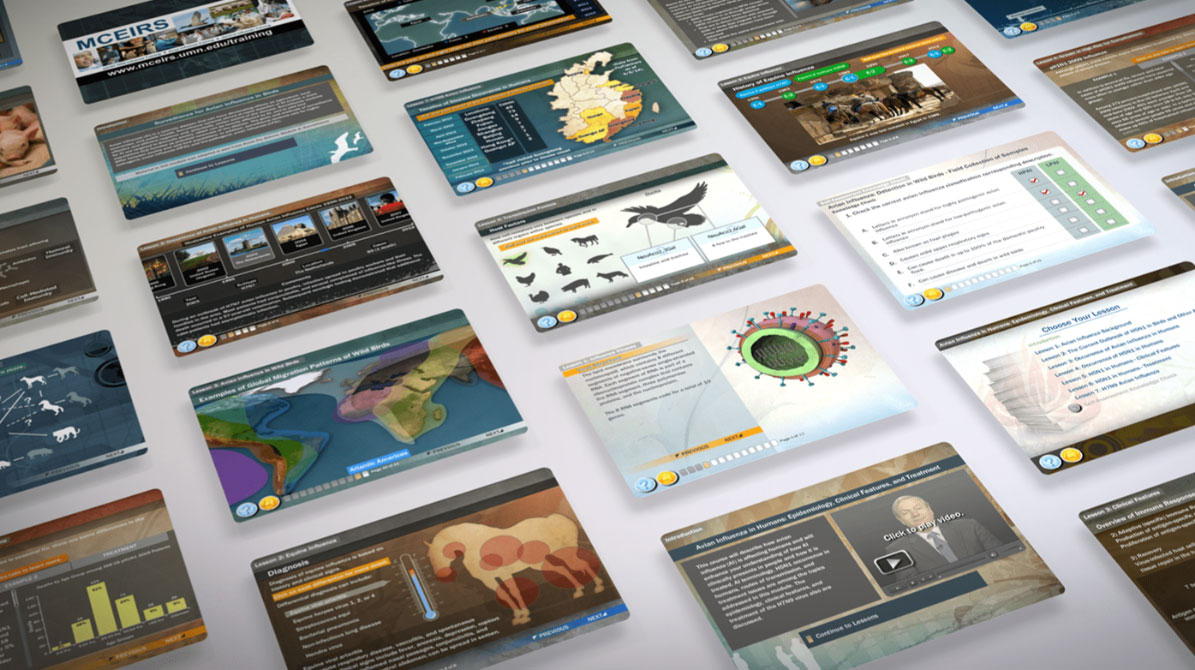
Project Overview
Client: CIDRAP, MCEIRS | Duration: 9-year contract (2 full-time, 7 part-time)
This project involved close collaboration with the University of Minnesota, Minnesota Center of Excellence for Influenza Research and Surveillance (MCEIRS), the Center for Infectious Disease Research and Policy (CIDRAP), and a multidisciplinary team of epidemiologists, medical professionals, instructional designers, developers, and media specialists.
Goal: Create interactive training modules that educate doctors, nurses, students, and other professionals about influenza diversity, reassortment, and transmission, including the 2009 H1N1 pandemic. The modules needed to evaluate knowledge, support university course credit, and enable seamless translation and ongoing updates.
Team: Product & Creative Director, Subject Matter Expert, Instructional Designer, Medical Director, Head Epidemiologist, Videographer, Engineer.
My Role - Product & Creative Director
- UX Design: Created information architecture, wireframes, prototypes, and user flows for 14 interactive training modules.
- Project Management: Collaborated with CIDRAP stakeholders and led a multidisciplinary team of developers, designers, and videographers.
- Interactive Design: Designed interactive elements, quizzes, animations, and media-rich learning experiences.
- Visual & Interaction Design: Directed the visual design and user interface across 800+ pages of educational content.
- Long-Term Support: Provided ongoing UX design, project management, content updates, and improvements throughout the nine-year project.
Impact
- Helped prepare students to educate peers and support H1N1 prevention and vaccination efforts.
- Standardized training around swine biosecurity and influenza containment.
- Expanded influenza surveillance training to companion animals and other potential transmission risks.
- Provided practical training for business continuity and proportional outbreak response.
- Supported N95 respiratory-protection guidance for healthcare workers treating H1N1.
The Challenge
- Audience Diversity: Design training experiences for a wide range of users, from doctors, nurses, and researchers to students, veterinarians, wildlife professionals, and government workers.
- Complex Information: Transform highly technical influenza research and epidemiology into clear, engaging, and easy-to-navigate learning experiences.
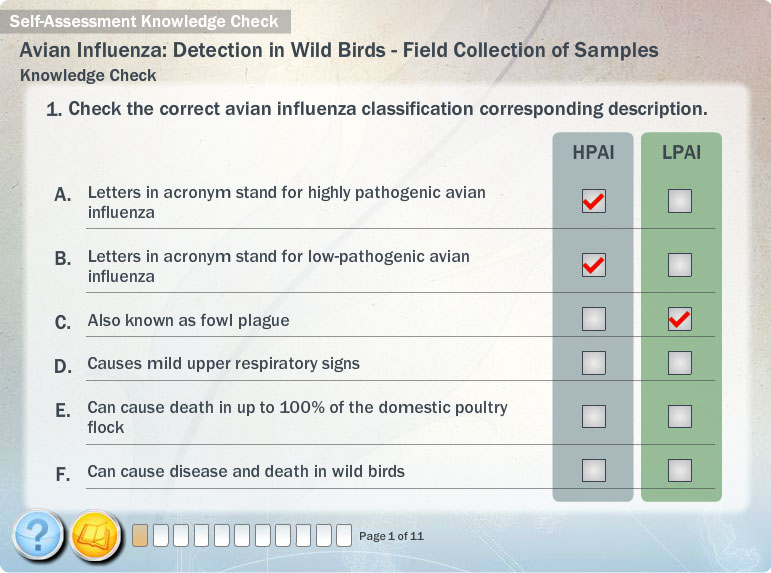
- Knowledge Evaluation: Build assessments that could measure comprehension and provide results suitable for university course credit.
- Translation & Maintainability: Structure content so it could be easily translated, updated as research evolved, and adapted for international audiences.
The Solution
We developed 14 interactive training modules containing 800+ slides, combining instructional content, interactive learning, multimedia, and assessment into a flexible training system.
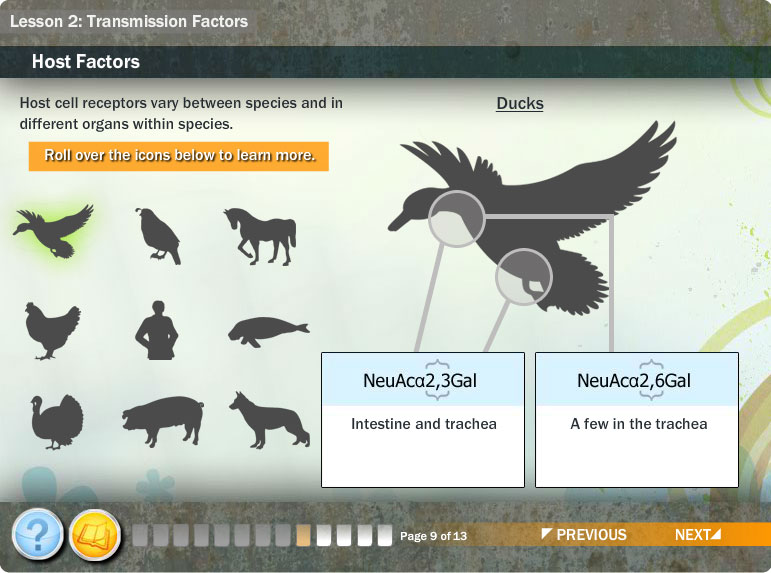
- Interactive Learning: Designed drag-and-drop activities, clickable interactions, quizzes, and other hands-on experiences to reinforce learning.
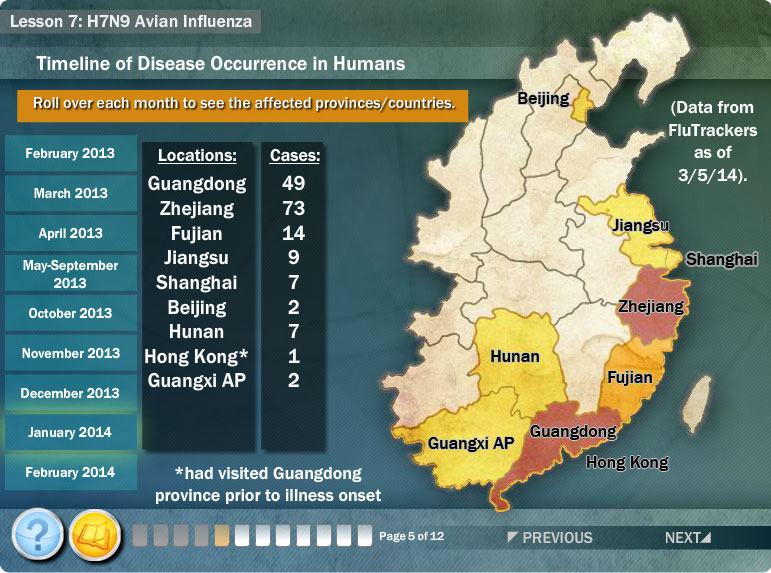
- Media-Rich Content: Integrated video, 3D visuals, graphics, maps, and animation to make complex scientific concepts easier to understand.
- User-Focused Experiences: Structured content and interactions around the needs of different audiences, from students to medical and research professionals.
- Knowledge Assessment: Integrated end-of-module quizzes to evaluate comprehension and record results for university course credit.
- Flexible Content System: Used XML-based content to separate instructional content from the interface, making modules easier to update, maintain, and translate.

UX Design Process
Research & Strategy
Worked closely with Dr. Michael Osterholm, medical directors, instructional designers, and other subject-matter experts to understand the research, learning objectives, and needs of different professional audiences. Translated complex influenza research into clear learning objectives and user experiences.
Information Architecture
Structured complex scientific content into logical learning paths, organizing information so users could progressively build knowledge while easily navigating between topics.
Wireframing & Prototyping
Created wireframes and low-fidelity prototypes to establish user flows, interaction patterns, and interface layouts before moving into production. Iterated designs through stakeholder feedback.
Interaction & Content Design
Designed interactive activities, quizzes, visualizations, and media-rich experiences that supported the educational objectives while maintaining a consistent and intuitive interface.
Testing & Iteration
Tested modules with representative users and stakeholders to identify usability and comprehension issues. Incorporated feedback to improve clarity, navigation, and engagement.
Implementation & Delivery
Delivered production-ready modules with XML-based content for future updates and translations, and trained the client team to maintain the system.
Key Results and Outcomes
- Student Workforce Mobilization: Trained students educated peers on H1N1 prevention and supported infection-control and vaccination efforts.
- Swine Biosecurity: Standardized practices for containment, sanitation, and animal health to reduce the risk of emerging influenza strains.
- Companion Animal Surveillance: Expanded influenza surveillance training to horses and other domestic animals to better identify transmission risks.
- Business Continuity & Response: Established practical protocols for sick leave, infection prevention, and public-health triage during high-transmission periods.
- Respiratory Protection: Supported evidence-based guidance advocating fit-tested N95 respirators for healthcare workers treating active H1N1 cases.
Product Results
- Delivered 14 interactive modules on budget and on time.
- Enabled content customization for diverse audiences, including international workers and field professionals.
- Facilitated knowledge assessment with customizable quiz functionality.
- Maintained and updated the modules over nine years, ensuring content remained current and impactful.
"I very much enjoy working with you, and the quality of your work is always excellent!"

Medical Director
CIDRAP
"The modules are amazing and truly professionally done!"

Training Coordinator
MCEIRS
Takeaways
This project highlighted the importance of user-centered design in educational tools. Balancing technical requirements with engaging, accessible content ensured a successful outcome that met diverse user needs. The challenges of managing a large-scale, multi-year project emphasized the value of adaptability and effective collaboration.
Tools & Technologies Used
- Pen and Paper wireframes and designed interaction templates.
- HTML, CSS, XML for dynamic and update-friendly content.
- Adobe Creative Suite for graphics and visuals.
- Microsoft Suite for feedback, validation, and data collection.